
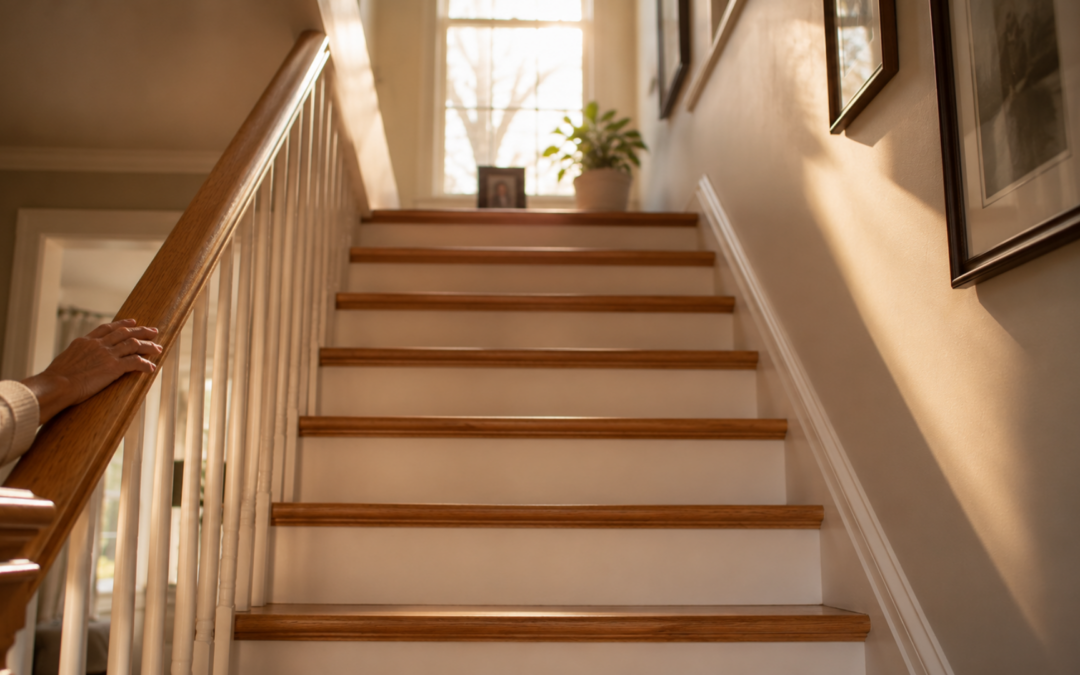
Independence South Suburbs homeowners have spent a lifetime building rarely disappears all at once. Instead, it slips away in small moments. A missed step on the stairs. A grocery bag that suddenly feels heavier than it used to. Then, eventually, a phone call from an adult child that starts with “Mom, I’ve been thinking.” Nobody wants to admit they are slowing down. Quietly, though, that reluctance shapes far more decisions than most families realize.
The Fear Underneath the Fear
On the surface, this looks like a conversation about stairs. It also looks like a conversation about driving, or about a house that has gotten harder to maintain. Underneath, however, it is almost never about the house at all. According to a Northwestern Medicine study of nearly 70 older adults in the Chicago area, stubbornness is not actually the biggest reason people resist accepting help. Rather, it is fear of losing independence. Close behind that comes a desire to not be a burden, and a fear of giving up control.
That distinction matters enormously. A homeowner who refuses to talk about downsizing is rarely attached to square footage. Instead, she is protecting something far more personal. That something is the sense that she is still the one making decisions about her own life. Once that sense of control feels threatened, even a gentle suggestion can land like a challenge to her whole identity.
Nobody teaches homeowners how to have this conversation, and most families are improvising it for the first time under emotional pressure, which rarely produces the calmest or clearest results.
Why Staying Put Can Feel Like the Safer Choice
According to AARP’s national Home and Community Preferences Survey, 75 percent of adults 50 and older say they want to remain in their current homes as they age. Right now, in the South Suburbs alone, thousands of homeowners share that exact preference. On its face, that number makes sense. What is less obvious, though, is how much of that preference comes from fear rather than genuine comfort.
Nearly half of adults over 50, meanwhile, privately expect they will have to move eventually. They say this even while insisting they would prefer to stay. That gap between preference and expectation says something important. In other words, many homeowners are not choosing to stay because the home still serves them well. Rather, they are staying because leaving feels like an admission they are not ready to make out loud.
This gap also explains why so many families feel stuck in a holding pattern. Everyone senses that a change is coming eventually, yet nobody wants to be the one to say it first. As a result, the topic gets quietly avoided year after year. Eventually, circumstances force the very conversation nobody wanted to start.
It is worth noticing how this shows up in ordinary conversations. A homeowner mentions, offhand, that the basement stairs feel steeper than they used to. An adult child changes the subject instead of asking a follow-up question. Both people, in their own way, are avoiding the same truth, and both are hoping someone else brings it up first.
How Fear Quietly Shrinks a Life
Fear of slowing down does not always look dramatic. Often, it looks like avoidance. According to the National Institute on Aging, many older adults develop a fear of falling. Notably, this happens even if they have never actually fallen. That fear, in turn, leads people to skip walks. It also leads them to avoid the stairs to the basement, and to stop attending events they used to enjoy, all without giving a real reason.
The tragic part, however, is that avoidance tends to backfire. Staying less active actually increases the risk of the very falls people are trying to prevent. A similar pattern shows up with driving. According to research compiled by the Health in Aging Foundation, giving up a driver’s license nearly doubles symptoms of depression among older adults. Largely, this happens because driving represents so much more than transportation. It represents, quite simply, the freedom to decide on your own terms where you go and when.
Little by little, these small avoidances add up to something larger. A person who once drove herself to church, ran her own errands, and hosted holiday dinners can find her world shrinking. It happens one skipped activity at a time, without her ever consciously deciding to slow down at all. Family members, meanwhile, often notice the pattern before the person living it does, though pointing it out rarely goes over well when it feels like an accusation rather than genuine concern.
The Quiet Cost of Never Saying It Out Loud
Here is what nobody tells you about pretending everything is fine. It does not actually protect your independence. Instead, it just delays an honest conversation. Eventually, a crisis forces that conversation to happen anyway, usually on someone else’s timeline instead of your own.
Families who wait for a fall, a hospital stay, or a frightening phone call rarely get the chance to make calm, thoughtful decisions. Instead, they get to react. Compare that to a family who talks honestly while everyone still has the clarity and time to weigh real options. One version preserves dignity and choice. The other, unfortunately, takes both away.
It is worth naming why this pattern repeats itself so often. Nobody wants to be the family member who brings it up first. So, the silence simply passes from one person to the next, until a crisis finally breaks it open. By then, the choices left on the table are usually far more limited. Months or years earlier, those same choices would have been far wider.
What Actually Helps
Admitting you are slowing down is not the same as giving up. In fact, it is often the very thing that protects independence the longest. I have written before about the home modifications that could keep you independent longer. Small, proactive changes, in fact, tend to buy far more freedom than waiting until a crisis forces bigger, more disruptive ones.
The same is true of the conversation itself. Naming what is changing, honestly and without shame, opens the door to solutions that actually fit. For example, staying put with the right modifications is one option. Moving somewhere that requires less physical effort is another. Building in support before it becomes urgent is a third. None of these choices, though, are available to someone who refuses to admit anything has changed in the first place.
None of this requires a dramatic announcement or a family meeting around the kitchen table. Often, it starts with something as simple as one honest sentence. “I noticed the stairs have been harder lately.” “I’ve been thinking about what comes next, and I’d like your thoughts.” Small openings like these tend to do more good than a single big conversation ever could, largely because they invite dialogue instead of forcing a decision on the spot.
Final Thought
Slowing down is not a failure. It is simply what happens to every person who lives long enough to experience it. The families who navigate this well are not the ones who avoid the truth the longest. Rather, they are the ones who find the courage to say it first. That courage, ultimately, is what leaves time to choose what comes next on their own terms.
There is a real difference between a family that discovers a crisis has already made the decision for them, and a family that got there first. The house, the driving, the stairs, none of that is really the point. The point is who gets to hold the pen when the next chapter gets written, and that is always worth protecting, starting today rather than waiting for tomorrow to force the issue.
When you are thinking about your next move, the free resource library has practical guides covering every aspect of later-life housing, from downsizing and aging in place to senior living options, care alternatives, and the resources you need to make confident decisions. And if you would like to understand how I work with homeowners over 50, the Homeowners 50+ page is the right place to start.
Prefer watching instead of reading? This auto-generated video summarizes the key points discussed in this article.
If you’re starting to think about what comes next, you don’t have to figure it out on your own. Sometimes it helps just to talk things through.
You can always take the next step at your own pace, with no pressure and no expectations. I’m always happy to help you get a clearer picture of your options.
Michelle Williams is a REALTOR® and SRES® serving Chicago and the South Suburbs, helping homeowners 50+ make confident decisions about their next move.