
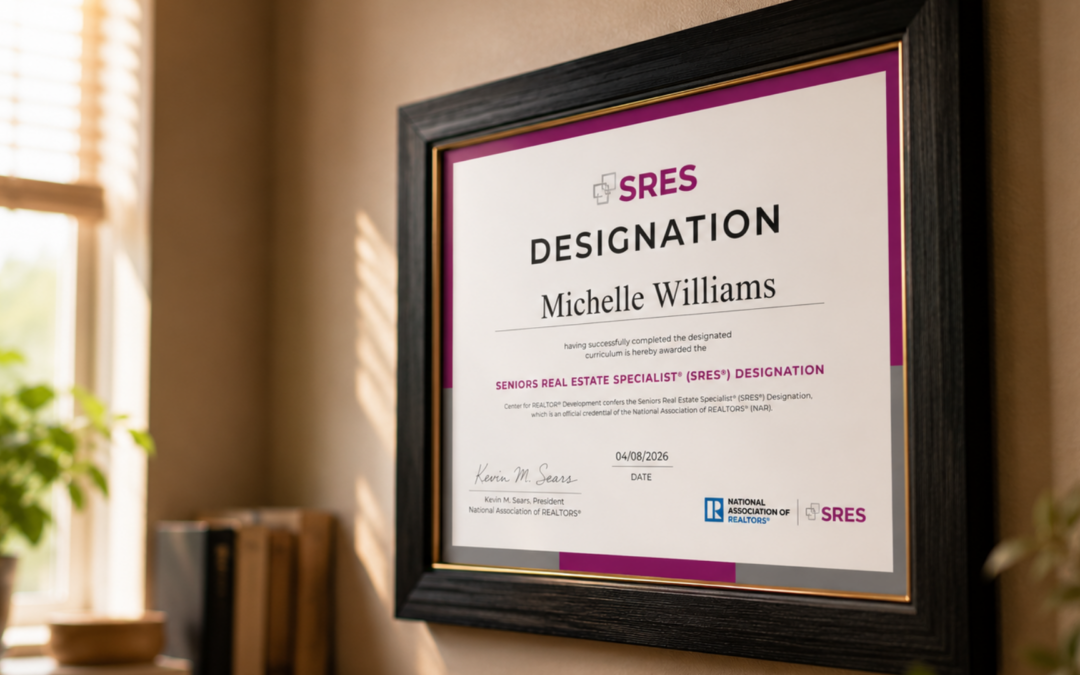
Finding an SRES agent Chicago homeowners can actually rely on matters more than most people realize. The myth that all real estate agents are interchangeable simply does not hold up under any real scrutiny. It sounds reasonable on the surface. Everyone passed the same licensing exam, right? In practice, what an agent has trained for beyond that basic license varies enormously, and that gap matters most for homeowners over 50.
This myth persists partly because the real estate industry looks uniform from the outside. Every agent has a license. Every agent can technically list a home or write an offer. What rarely gets discussed publicly is how differently agents prepare beyond that baseline. That difference in preparation shapes the actual experience of selling a home later in life, often in ways nobody explains upfront.
How Many Agents Are We Actually Talking About
According to Real Estate News, the National Association of Realtors reported roughly 1.52 million members nationwide. That is a massive pool of professionals, and it means real estate is far from a small, uniform club. Some agents specialize in luxury homes. Others focus on commercial properties, land, or new construction. Assuming they all bring the same expertise to a senior homeowner’s specific situation is simply inaccurate.
What Training Actually Looks Like
According to the National Association of Realtors, the Seniors Real Estate Specialist designation exists for a specific reason. Working with mature clients requires distinct knowledge and preparation that a standard license does not provide. Earning it involves dedicated coursework focused entirely on the 50+ market, covering topics a general practice agent may never study in depth.
This training covers real, specific ground. Coursework includes how Social Security, Medicare, and long-term care planning intersect with a home sale. It covers recognizing scams that specifically target older homeowners. Understanding senior housing options beyond a standard single-family listing, from active adult communities to continuing care arrangements, is part of the curriculum too. None of this comes automatically with a real estate license.
The NAR Designations and Certifications page lists dozens of specialty credentials beyond SRES alone, covering everything from luxury homes to military relocation to commercial investment. Every one of them exists because the same reasoning applies across the industry. A license proves someone can legally practice real estate. It does not prove they have trained for a specific kind of client or transaction.
Why This Gap Matters More for Homeowners Over 50
An agent without this specific training is not doing anything wrong. They simply were never taught to think about a transaction this way. A sale for a homeowner over 50 often involves far more than a straightforward listing. Coordinating with adult children who live in another state is common. So is navigating a health event that changed the timeline unexpectedly. Recognizing warning signs of elder financial abuse also matters, in a way a general practice agent was never specifically trained to notice.
According to the U.S. Census Bureau, the entire baby boomer generation, an estimated 73 million people, will be age 65 or older by 2030. This is not a small niche market. It is one of the largest demographic shifts in the country’s history. Finding an SRES agent Chicago families can trust matters more each year this shift continues, not less.
What Specialized Training Actually Changes
The difference shows up in specific, practical ways during a transaction. An SRES-trained agent understands how a home sale interacts with Medicaid eligibility timelines. They understand why moving too quickly, or too slowly, can affect a family financially. These effects often have nothing to do with the sale price itself. They know how to talk through a move with someone who has lived in a home for thirty years. That conversation happens without making it feel rushed or dismissive.
This kind of preparation also changes how an agent handles setbacks during a transaction. A health scare mid-process, a family disagreement about timing, or a sudden need to involve an elder law attorney are not rare occurrences in this market. An agent who has never encountered these situations in training may treat them as unusual complications. An agent who trained specifically for this population treats them as simply part of the normal process, and responds accordingly.
None of this happens automatically. It comes from choosing to complete a specific course, pass a specific exam, and commit to ongoing education focused on this exact population. Some agents make that choice. Many do not, and that is a completely reasonable decision on their part, since their business may simply focus elsewhere.
An SRES agent Chicago families work with should also understand the pace of a decision like this. Selling a longtime family home rarely moves at the same speed as a typical transaction. There is more emotional weight, more family input to gather, and often more logistics to coordinate around health, timing, and finances all at once. An agent trained specifically for this population learns to work at that pace deliberately, rather than pushing a timeline that fits a younger buyer or seller more comfortably.
A Real Example of Why This Matters
Consider two agents helping with the exact same type of listing, a longtime family home where the owner recently moved into assisted living. One agent lists it the same way they would list any other property, focused on price and marketing photos. The other recognizes the family may be navigating Medicaid look-back rules, coordinating with siblings who disagree about timing, and processing grief about the decision itself, all at once. Both agents are licensed. Both mean well. Only one of them is actually prepared for what this specific family is going through.
That difference is not about which agent works harder or cares more, since most agents genuinely do care about their clients. It is about which one received training that covers this exact situation. An SRES agent Chicago families choose specifically for this reason gets that preparation built into how they approach the entire transaction from the first conversation.
How to Actually Check
The good news is that verifying this is not difficult at all. Ask directly whether an agent holds the SRES designation, or any other credential relevant to your specific situation. A legitimate designation can be verified, and an agent who has earned one will typically mention it without hesitation.
It is also worth asking what the training actually covered. A real answer will sound specific: coursework on housing transitions, financial considerations tied to aging, or family dynamics around a move. A vague answer, or defensiveness about the question, tells you something too.
Beyond SRES specifically, it also helps to ask how many similar transactions an agent has actually handled recently and successfully. Training establishes the foundation, but recent, relevant experience builds on it. An agent who completed the coursework five years ago but rarely works with this population may be less current than one actively working in this space today. Both pieces matter together.
As an SRES, I encourage every homeowner over 50 to ask questions before choosing who represents such an important transaction. The size of an agent’s yard sign has nothing to do with whether they understand your specific situation. Training does, and so does a genuine track record working with people at this exact stage of life.
Your Next Move
When you are thinking about your next move, choosing the right agent for your specific situation is worth factoring into your overall plan. My free resource library has practical guides covering every aspect of later-life housing, from downsizing and aging in place to senior living options, care alternatives, and the resources you need to make confident decisions. And if you would like to understand how I work with homeowners over 50, the Homeowners 50+ page is the right place to start. Feel free to review both on your own schedule.
Prefer watching instead of reading? This auto-generated video summarizes the key points discussed in this article.
If you’re starting to think about what comes next, you don’t have to figure it out on your own. Sometimes it helps just to talk things through.
You can always take the next step at your own pace, with no pressure and no expectations. I’m always happy to help you get a clearer picture of your options.
Michelle Williams is a REALTOR® and SRES® serving Chicago and the South Suburbs, helping homeowners 50+ make confident decisions about their next move.