
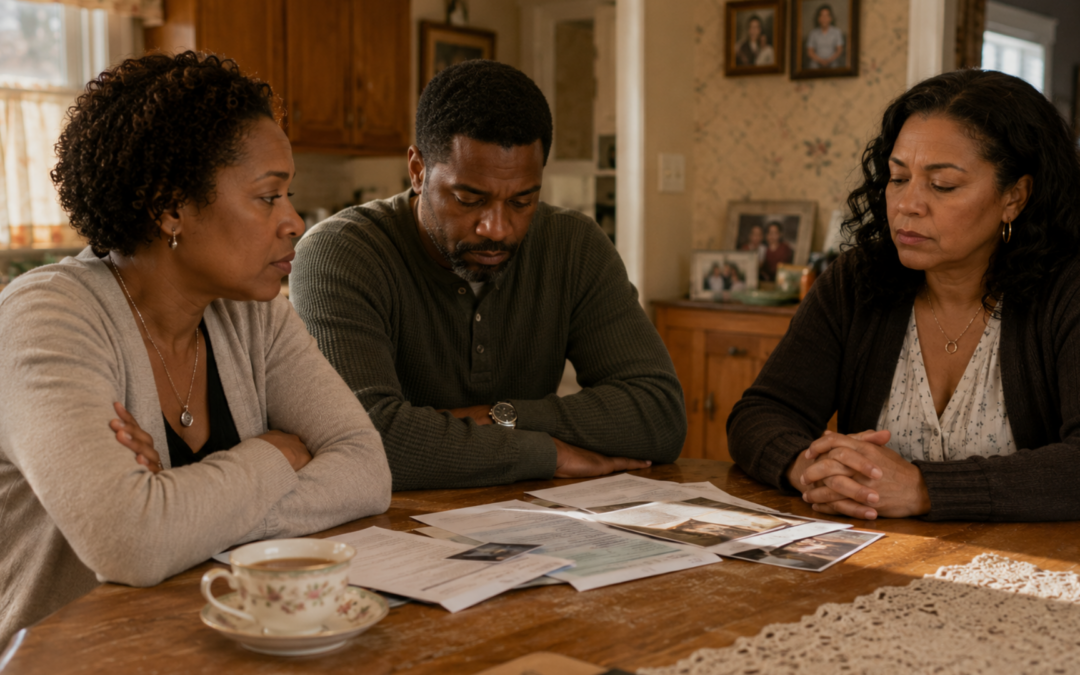
It starts with the best of intentions. The family gathers after a loss, or after a difficult conversation about an aging parent, and somebody says: we need to figure out what to do with the house. Then, sometimes slowly and sometimes very quickly, it becomes clear that not everyone has the same answer in mind. For families navigating sibling conflict inherited home Chicago situations, this is one of the most emotionally charged real estate conversations there is. It is also one of the least talked about. It sits right at the intersection of grief, money, history, and family dynamics that have been building for decades.
This blog is for the families in the middle of that conversation right now.
Why Siblings Disagree More Than Anyone Expects
The disagreement rarely starts with the house itself. It starts with everything the house represents. To one sibling, it is the family home where everything important happened. Selling it feels like erasing something irreplaceable. To another, it is a significant financial asset that needs to be handled practically. A third may see it simply as a source of stress and expense, and the sooner it is resolved, the better.
All three positions are completely understandable. None of them is wrong. However, when they exist simultaneously around the same kitchen table, with grief still fresh and family history in the walls, the conversation can become very difficult very quickly.
According to AARP’s research on family conflict in caregiving, disagreements over inherited property are among the most common sources of lasting family conflict. Notably, these disagreements are rarely purely financial. They are almost always emotional first, and practical second.
The Four Most Common Points of Conflict
Understanding where the fault lines tend to appear can help families navigate them more deliberately.
The first and most common is the sell versus keep divide. One sibling wants to sell and divide the proceeds. Another wants to hold onto the property, whether for sentimental reasons, as a rental investment, or simply because they are not ready to let go. Without a clear agreement, this conflict can stall a property in limbo for months or even years.
The second is the equity question. In some families, one sibling has been the primary caregiver. They may have lived in the home or contributed financially to its upkeep. That sibling may feel entitled to a larger share of the estate. Others may not see it the same way. This conflict is especially painful. It touches on sacrifice, fairness, and years of unspoken feelings all at once.
The third is timeline tension. One sibling needs the money quickly. Another prefers a longer, more deliberate process. A third may not be emotionally ready to move at any speed. When people are operating on different timelines, pressure builds fast.
The fourth is the condition and contents question. What happens to the furniture, the photographs, the china set, the car in the garage? Who decides what repairs the house needs? Who pays for them and how are costs divided? These questions sound small. In practice, they generate enormous friction, particularly when siblings live in different states.
What Illinois Law Actually Says
When a parent passes and leaves a home to multiple heirs, the legal situation depends on whether a will exists and how the property was titled. If the home passes through probate, the court oversees the distribution. A Transfer on Death Instrument, known as a TODI, allows the property to transfer directly to named beneficiaries. It is faster and far less expensive than probate.
Even with a clean legal transfer, the decision about what to do with the property still belongs to the heirs jointly. If they cannot agree and one heir wants to force a sale that others oppose, Illinois law provides a mechanism called a partition action. This allows a co-owner to petition the court to force the sale. It is a last resort. It is costly and damaging to family relationships. Illinois Legal Aid Online explains co-ownership rights and partition in plain language if you need to understand the legal landscape more clearly.
Knowing partition exists sometimes motivates families to find their own solution before the courts find one for them.
How Families Actually Get Through It
The families who navigate this well tend to share a few common approaches.
Bringing in a neutral third party early changes everything. A mediator, an estate attorney, or an experienced real estate professional can shift the entire tone of the conversation. When a neutral voice takes the referee role, siblings often find it easier to actually hear each other. The Illinois State Bar Association offers a referral service for estate and probate attorneys if you need a starting point.
Separating the emotional conversation from the practical one also helps enormously. Deciding what the house means to the family and deciding what to do with it financially are two different conversations. Trying to have both at once makes both harder. Some families hold one gathering purely to share memories and feelings, and a separate one focused entirely on options and next steps.
Before You Make Any Decisions
Getting a professional valuation before anyone starts negotiating is equally important. Many sibling conflicts escalate because nobody actually knows what the property is worth. Once an independent market value is established, the conversation becomes more grounded. An SRES® can provide a comparative market analysis and help the family understand what the home would realistically sell for in the current Chicago area and South Suburbs market.
Finally, agreeing on a timeline before anything else reduces pressure considerably. Even if siblings cannot agree on what to do, agreeing on when a decision needs to be made gives everyone a framework. It prevents the process from drifting while also removing the sense that every conversation is the final one.
The Role of an SRES® in Family Conflict
As an SRES® (Senior Real Estate Specialist), I work with families navigating exactly this kind of situation regularly. Part of what I bring is real estate expertise. Part of it is an understanding of the emotional weight these decisions carry. I am not a mediator or an attorney, and there are moments when both are essential. However, I can help a family understand their options clearly, provide an honest picture of the local market, and create a process that feels manageable rather than overwhelming.
If the family decides to sell, having one trusted professional coordinating the process makes everything smoother. Rather than siblings pulling in different directions, there is one calm point of contact. The free one-page guide Managing Conflict When Selling a Parent’s Home is a practical starting point for families in the early stages of this conversation.
You Don’t Have to Figure This Out Alone
Every family navigating this conversation deserves good information and genuine support. If you are in the middle of this right now, you do not have to figure it out alone.
My goal is simple. I want to make sure you feel informed, empowered, and supported at every stage of this process. That is why I put together a free resource library packed with guides covering everything from downsizing and senior living options to navigating major life transitions. If you are thinking about working with a financial advisor, this free guide on what to expect when you meet with a financial advisor is a practical starting point. And if you would like to understand more about what I do as an SRES® and why it matters for homeowners over 50, the Homeowners 50+ page is a good place to start.
Prefer watching instead of reading? This auto-generated video summarizes the key points discussed in this article.
If you’re starting to think about what comes next, you don’t have to figure it out on your own. Sometimes it helps just to talk things through.
You can always take the next step at your own pace, with no pressure and no expectations. I’m always happy to help you get a clearer picture of your options.
Michelle Williams is a REALTOR® and SRES® serving Chicago and the South Suburbs, helping homeowners 50+ make confident decisions about their next move.