
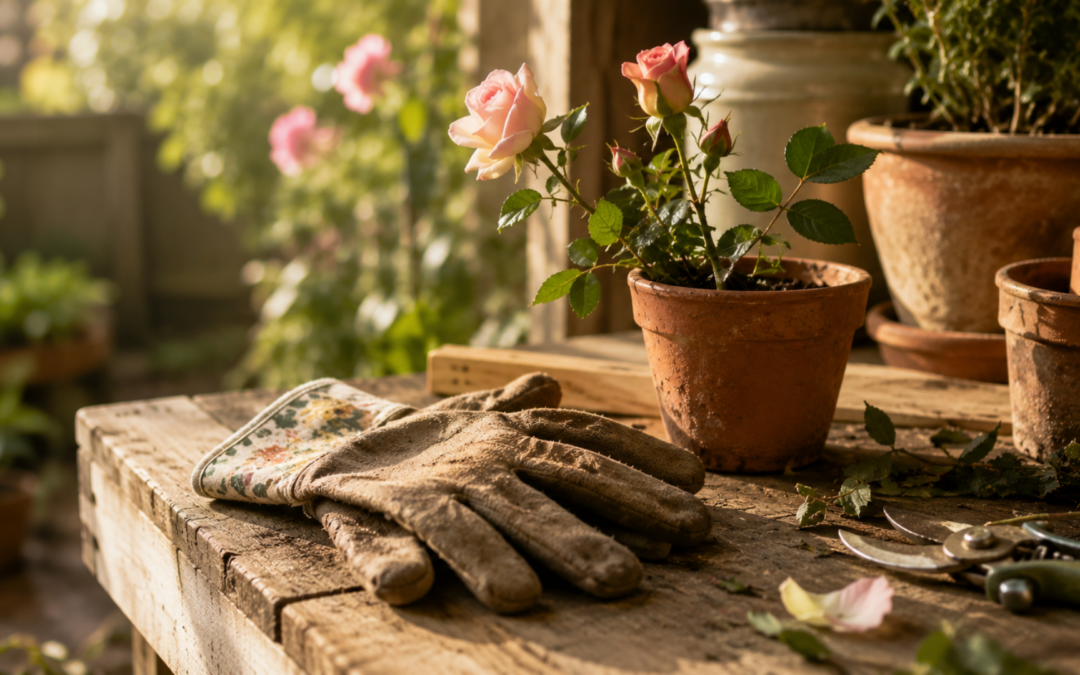
A South Suburbs garden often holds more history than any other part of a home. Almost nobody talks about what it feels like to leave one behind. Furniture gets packed. Photographs get boxed up carefully. But the roses someone planted the year their first grandchild was born rarely get mentioned at all. Saying goodbye to them can feel like its own quiet loss, one that rarely gets its own conversation.
Why This Grief Is Real
Gardening is not just a pleasant way to pass an afternoon. According to a study published in Scientific Reports, horticultural activities measurably improved happiness, life satisfaction, and sleep quality among older adults over just six weeks. The researchers also found physical markers of reduced stress after each gardening session. This is not a small effect tucked into a research footnote. It reflects something many gardeners in a South Suburbs garden already know instinctively, even without ever reading a study about it.
A garden someone has tended for decades becomes a record of specific years, people, and memories. One rose bush might mark an anniversary. A vegetable patch might trace back to a project with a child who has long since grown up and moved away. None of this shows up on a real estate listing, but it shapes how leaving actually feels once the day finally arrives.
Even the routine parts of gardening carry real weight. Checking the soil every morning before coffee. Knowing exactly which corner of the yard gets the most afternoon sun. These small habits, repeated for years, become part of how a person moves through their own life. Losing access to them is a real loss, even when nobody around them treats it that way.
The Grief Nobody Names
Grief researchers have a term for sorrow that never gets openly acknowledged. According to Doka’s concept of disenfranchised grief, some forms of loss are not recognized on a personal or societal level. This can leave the grieving person feeling isolated, unsure whether their reaction is even valid. Nobody brings a casserole when a garden gets left behind. There is no ceremony, no card, no expected period of mourning.
That absence of recognition does not make the feeling less real. It just means the person experiencing it often processes it quietly, sometimes without even having language for what they are feeling. Many homeowners describe a strange embarrassment about how much they miss a yard. Grieving a garden can feel somehow less legitimate than grieving anything else tied to a home, even though it rarely is.
This shows up in small ways during a move. Someone might tear up while packing kitchen boxes, then feel confused about why the yard outside the window bothers them more than the house itself. There is no single reason for that response, and there does not need to be one. A garden is not just landscaping. It is years of physical labor, patience, and attention, all invested in one specific patch of ground, tended through every season for far longer than most other parts of a home ever get.
One Homeowner’s Rose Bushes
Eleanor had lived in her Olympia Fields home for thirty-four years. The rose bushes along her back fence came from cuttings her mother gave her the spring she moved in. Over three decades, those roses survived droughts, harsh winters, and one particularly brutal storm that took down half the fence around them.
When Eleanor finally decided to downsize, packing the house felt manageable. Furniture went to her children. Dishes went to a donation center. But something else happened that final week. Eleanor found herself standing at the back fence more than once, just looking at the roses, unsure how to say goodbye to something that could not be boxed up and moved along with everything else.
Eventually she did something simple. Taking several cuttings from the healthiest canes, she potted them before the movers arrived. They did not look like much at first, just a few sticks in soil. But that small act gave her something to carry forward, rather than something she had to leave behind entirely.
Eleanor’s story is not unusual. Almost every South Suburbs garden carries some version of this same quiet attachment. It might be roses, a vegetable patch, or a single tree planted the year a child was born. The specific plant rarely matters as much as what it represents.
You Can Bring the Garden With You
Eleanor’s instinct was right, and it works for more than roses. According to University of Illinois Extension, container gardening lets someone grow plants successfully in a small outdoor space. A balcony works. Even a sunny window ledge indoors works. A large yard is not required to keep gardening as part of daily life.
This matters more than it might seem at first glance. The goal is rarely to recreate an entire yard in miniature. It is to keep a small piece of a decades-long practice alive somewhere new. A single potted rose cutting on a condo balcony carries meaning far beyond its size. It is proof that a connection to a place does not have to end just because an address changes.
For homeowners moving into a smaller home, a 55+ community, or a space with no yard at all, this still applies. Even a few containers by a sunny window can preserve something that matters. The scale changes. The practice itself does not have to disappear, and neither does the sense of identity that comes with it.
Some homeowners find that a smaller garden actually suits their life better after a move. Fewer beds to weed. Less lawn to mow. Less time spent on upkeep and more time spent simply enjoying it. The same sense of purpose, just scaled to match the energy and time available now, rather than the energy available thirty years earlier.
Final Thought
Grief over a garden does not need anyone else’s permission to be real. It does not need to make sense to someone who has never spent thirty years learning exactly when a particular rose needs pruning. What matters is acknowledging the loss honestly, rather than dismissing it as something too small to matter to anyone else.
This kind of grief often arrives at unexpected moments too. It might surface while walking past a neighbor’s yard that looks nothing like the one left behind. It might show up the first spring in a new home, when nothing blooms because nothing has had time to grow yet. These moments deserve the same gentleness as any other part of a difficult transition, even when they catch someone off guard on an otherwise ordinary day.
Eleanor still has her potted roses on a small patio outside her new front door. They look different than they did along that old fence. But they are still hers, still blooming every June, still carrying forward something that started with her mother’s cuttings over three decades ago.
One Note Before You Go
As an SRES, I encourage every homeowner facing a similar move to acknowledge this kind of loss honestly rather than brushing past it quickly. A garden built over decades deserves more than a quick goodbye on moving day, and giving it that acknowledgment often makes the whole transition feel a little less abrupt.
When you are thinking about your next move, it helps to have guidance that takes the full emotional weight of the process seriously, not just the paperwork and logistics involved.
My free resource library has practical guides covering every aspect of later-life housing, from downsizing and aging in place to senior living options, care alternatives, and the resources you need to make confident decisions. And if you would like to understand how I work with homeowners over 50, the Homeowners 50+ page is the right place to start. Feel free to review both on your own schedule.
Prefer watching instead of reading? This auto-generated video summarizes the key points discussed in this article.
If you’re starting to think about what comes next, you don’t have to figure it out on your own. Sometimes it helps just to talk things through.
You can always take the next step at your own pace, with no pressure and no expectations. I’m always happy to help you get a clearer picture of your options.
Michelle Williams is a REALTOR® and SRES® serving Chicago and the South Suburbs, helping homeowners 50+ make confident decisions about their next move.