
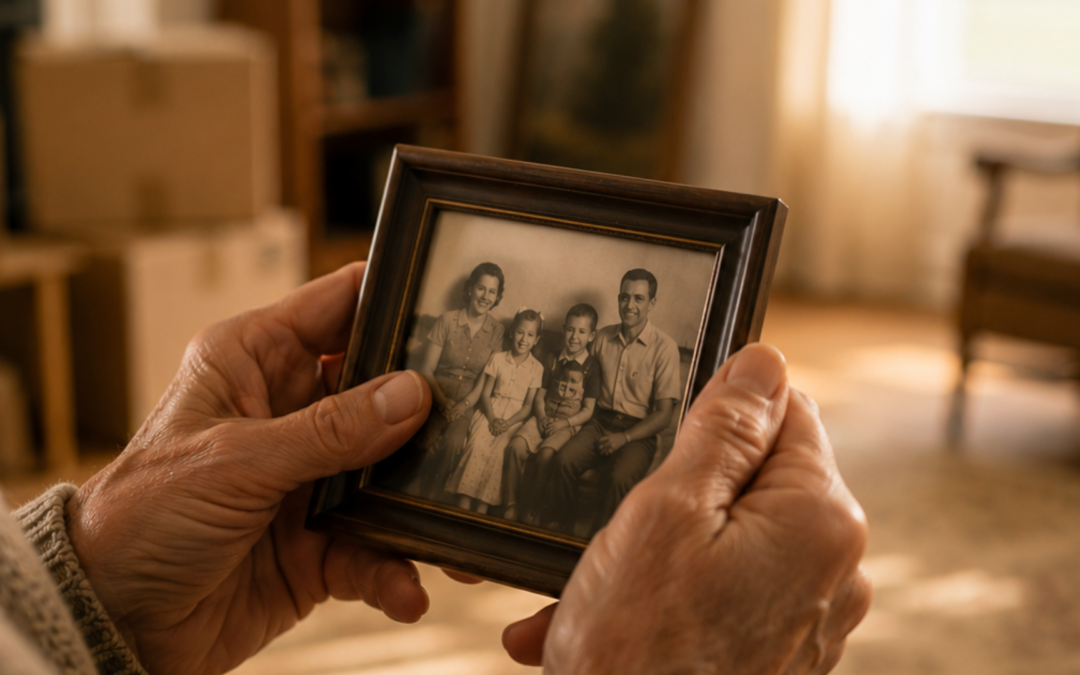
There comes a moment, usually quiet and unannounced, when you realize that selling the family home is not just a real estate transaction. It is something far more personal than that. For many homeowners involved in selling a family home in Chicago, the hardest part is not the paperwork or the pricing. It is the leaving. It is closing the door on a place that holds decades of life inside its walls.
That is not a weakness. It is a completely natural response to one of the biggest transitions a person can face.
This blog is not about how to depersonalize your home for buyers, or how to stage the living room for a listing photo. There is a time for all of that. But before any of that begins, there is something worth acknowledging: what you are carrying emotionally, and how you might find a way to honor it. Because this moment deserves more than a moving checklist.
Why Saying Goodbye Feels So Hard
A home is not just a building. Over the years, it becomes the backdrop to everything. The kitchen where children were fed breakfast before school. The backyard where holidays were celebrated. The bedroom where someone recovered from surgery, or where you sat up late worrying, or where you finally felt safe. All of that lives in the walls, the floors, the light at certain times of day.
Psychologists recognize that for many people, a home represents stability, identity, and continuity. When that connection is disrupted, even by choice, it can stir up genuine grief. The AARP describes the downsizing process as genuinely difficult, and notes that sorting through a home full of memories can be emotionally overwhelming, even when the decision to sell is a good one. That validation matters. You are not being overly sentimental. You are being human.
Moreover, for homeowners over 50 who have lived in the same property for twenty or thirty years, the emotional weight is often layered. There is grief for the past, anxiety about the future, and sometimes a strange kind of guilt about moving on, as though leaving means forgetting. All three can show up at the same time, and none of them means you are making the wrong decision.
It also helps to name the specific things you will miss, not the house in general, but the particular details. The quality of light on a winter afternoon in the front room. The sound the back door makes when it closes. The way the garden smelled after rain in May. Naming these things helps make the goodbye real and intentional, rather than something that just happens around you while you are busy packing boxes.
Give Yourself Permission to Feel It
The first and most important step is simply this: allow yourself to feel what you feel. Do not rush through the goodbye in the interest of getting the house on the market quickly. The practical side of selling will get its time. The emotional side deserves attention too, and giving it that attention actually makes the whole process easier, not harder.
Many people find that when they suppress the emotional side of a home sale, it resurfaces later, sometimes as unexpected sadness, sometimes as regret, sometimes as a vague sense that something was left unfinished. Consequently, taking time to acknowledge what you are leaving behind is not indulgent. It is part of doing this well.
Additionally, it helps to separate the memories from the walls. The memories go with you. They always have. The house holds echoes of them, certainly, but the actual experiences, the love, the laughter, the ordinary Tuesday evenings, those belong to you, not the building. The building is a container. What it held is yours to keep.
Ways to Honor the Home Before You Leave
There are beautiful, meaningful ways to mark the end of this chapter. None of them require spending money. They simply require intention. Here are some of the most meaningful things you can do before you hand over the keys.
Walk every room slowly. Before the movers arrive, take a quiet walk through the house on your own, or with the people who shared it with you. Not to check that things are packed, but simply to be present in the space one last time. Notice what you notice. Let the memories come without rushing them away. This is not morbid. It is respectful.
Take photographs with purpose. Most people photograph a home for listings or for insurance records. Consider taking a different kind of photograph: the view from the kitchen window on a clear day, the patch of garden that always bloomed first in spring, the height marks penciled onto the door frame, the particular corner of the living room where the afternoon light falls just so. These are the images that will matter to you in ten years, not the wide-angle shots for the listing.
Write something down. Some families write a letter to the house, or to the next family who will live there. Others simply write a few pages in a journal about what the home meant to them. Neither needs to be shared with anyone. The act of putting it into words can make the transition feel complete in a way that simply moving out does not.
Small Gestures That Carry Big Meaning
Pass something on with a story. If there is a piece of furniture, a plant, or a small object connected to the home, consider giving it to someone who will carry its story forward. A cutting from a rose bush in the garden, a favorite reading chair, the lamp that sat on the sideboard for thirty years. These objects become bridges between the old chapter and the new one, and giving them with intention is an act of love, not loss.
Mark it together. If children or grandchildren are part of the story of this home, consider inviting them to be part of the goodbye. A final meal, a last walk around the yard, a simple gathering with no particular agenda. Not a wake, but a recognition that something significant is ending, and something new is beginning. Children often handle transitions better when they are included rather than shielded from them.
Create a small memory box. Before you pack the last of your belongings, set aside a handful of objects that represent the home to you. A pebble from the garden. A photograph from a specific year. The spare key you always kept in the kitchen drawer. A pressed flower from the backyard. These need not be valuable. They simply need to be true to what this place meant.
What Comes Next Is Also Worth Honoring
It is easy to focus entirely on what is being left behind. Equally, the next chapter carries its own possibilities. A smaller home is often easier to manage, less expensive to maintain, and better suited to the life you are actually living now rather than the life the house was built around. Many homeowners over 50 describe a genuine sense of relief once they have settled somewhere new, a feeling of having shed a weight they had been carrying without quite realizing it.
Furthermore, the memories do not diminish with distance. Time does not undo what happened in those rooms. Moving forward is not the same as forgetting. In fact, for many people, a little distance makes the good memories even clearer, sharper, and easier to hold with gratitude rather than grief.
If you are in this moment right now, or approaching it, you do not have to have it all figured out. You can be both sad about leaving and genuinely ready to move forward at the same time. Those two things are not in conflict. They are both part of the same honest goodbye.
A Final Thought
The family home gave you what it gave you. Now it is time to carry that with you. Wherever you go next, you take everything that mattered. The walls were just the container.
Whatever your next chapter looks like, the resources you need are here for you. My free resource library includes guides covering downsizing, decluttering, aging in place, and long-term care options. And if you want to understand how I work with homeowners over 50 through every part of this transition, the Homeowners 50+ page is a good place to start.
Prefer watching instead of reading? This auto-generated video summarizes the key points discussed in this article.
If you’re starting to think about what comes next, you don’t have to figure it out on your own. Sometimes it helps just to talk things through.
You can always take the next step at your own pace, with no pressure and no expectations. I’m always happy to help you get a clearer picture of your options.
Michelle Williams is a REALTOR® and SRES® serving Chicago and the South Suburbs, helping homeowners 50+ make confident decisions about their next move.