
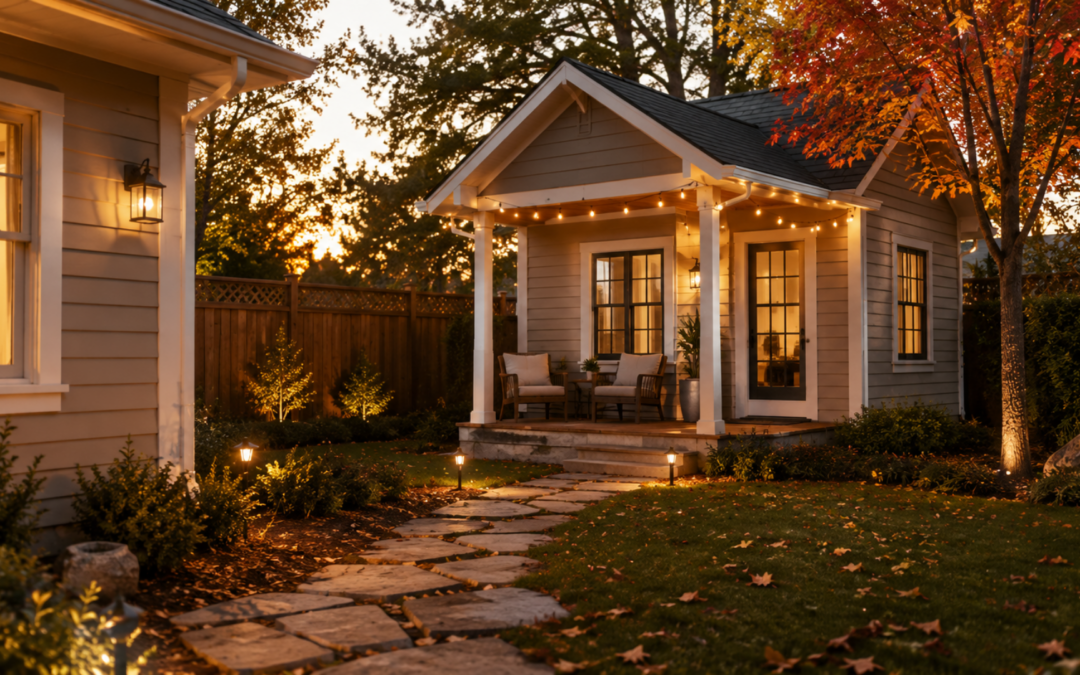
If South Suburbs downsizing has been on your mind lately, you are far from alone this year. More families across Homewood, Flossmoor, and the surrounding communities are asking the same question. What happens to the money from selling the family home? Could that money help more than one generation at once? Here is one family’s story, and how the numbers actually worked out for them.
What Is an Accessory Dwelling Unit, Exactly?
An accessory dwelling unit, or ADU, is a small, self-contained home on the same lot as a larger house. It has its own kitchen, its own bathroom, and its own entrance. Some people call them coach houses. Others call them granny flats or in-law suites. According to AARP, homeowners can convert an existing structure, like a garage, into an ADU, or build one new from the ground up. The key feature is independence. Whoever lives there has their own space, even while staying close to family.
For older homeowners weighing South Suburbs downsizing options, an ADU offers something an apartment or a 55+ community cannot always provide. It offers proximity without sacrificing privacy. A grandparent can live five minutes away instead of five hours away, and still keep a front door that locks and a kitchen that is entirely their own to use however they like.
One Family’s Path From a Big House to a Bigger Plan
Barbara had lived in her four-bedroom home in Flossmoor for thirty-one years. Her children were grown, and her grandchildren were growing fast. The house had become more work than joy. Cleaning gutters, managing a large yard, and heating rooms nobody used anymore had all started to weigh on her.
Her son and his wife owned a home nearby with a large backyard. They loved having Barbara close, especially with two young kids who adored their grandmother. Nobody had a clear plan for what “close” should actually look like long-term, though.
The idea came up almost by accident. Barbara’s son mentioned that a coworker had built a small backyard cottage for his aging mother. Barbara started asking questions. Could something like that work for her family too? Could the proceeds from selling her Flossmoor house help make it happen?
After a few conversations with her son and a contractor, the plan took shape. Barbara would sell her house. Part of the proceeds would go toward building an ADU behind her son’s home. This meant downsizing from thirty-one years of accumulated space into a smaller unit that fit exactly how she lives now.
Independence stayed intact. A five-minute walk to her grandchildren’s bedtime stories became part of daily life. She traded a house that no longer fit her life for one that did.
What This Actually Costs, and Where the Money Comes From
This is the part families ask about most, so let’s be direct. Selling a primary residence can trigger capital gains tax, but many homeowners qualify for a significant exclusion. According to the IRS, single filers can exclude up to two hundred fifty thousand dollars in gain from the sale of a primary residence. Married couples filing jointly can exclude up to five hundred thousand dollars. To qualify, you generally need to have owned and lived in the home for at least two of the five years before the sale.
That exclusion can shape how much money remains after a home sale, and that remaining amount often funds a project like Barbara’s directly. I encourage every homeowner considering a similar path to talk with a CPA or tax professional early. Doing this before the house even goes on the market means no surprises at closing.
Building costs for an ADU vary widely depending on size, finishes, and whether you convert an existing structure or build a new one from scratch. A contractor familiar with local codes can give a realistic estimate for a specific property. That number should shape directly how you plan the sale of the existing home.
Zoning Realities Across the South Suburbs
Here is something many families do not realize until they are already deep into planning. ADU rules are not the same from town to town. According to the Chicago Metropolitan Agency for Planning, communities across the region set their own standards for ADU size, parking, and whether the property owner must live on site.
Homewood already permits accessory dwelling units through its zoning ordinance. Several other communities in the region either allow them or are actively considering it, and the list keeps growing as more families ask for this option.
This means the very first phone call in any ADU plan should go to the local municipality, not to a builder. Confirming what the zoning code allows on a specific lot saves months of frustration later. I strongly suggest checking this step before falling in love with a floor plan, since not every design fits every zoning code.
A Trend That Is Bigger Than One Family
Barbara’s story is not unusual anymore. According to the National Association of Realtors, multigenerational home buying reached an all-time high last year. Roughly 17% of home purchases last year involved more than one generation living under one roof. Rising costs, caregiving needs, and a desire to stay connected are all pushing families toward creative living arrangements that would have seemed unusual a decade ago.
Some families choose to buy one larger home together instead. Others, like Barbara’s, use the proceeds from downsizing one home to help build a smaller, separate space nearby. Both paths solve a similar problem in different ways, and neither one is more right than the other.
Adult children often carry more of this planning than anyone expects. This is especially true when a parent is juggling logistics from a distance, or trying to balance their own household at the same time. If that sounds familiar, my post on Caught in the Middle covers how one family navigated the pressure of managing a parent’s move while raising kids of their own.
Is This the Right Fit for Your Family?
An ADU is not the right answer for every homeowner considering downsizing, and it should not carry that assumption. It works best under a few conditions. Family members already live nearby. The primary home carries enough equity to make a real difference. Every family member genuinely wants this kind of closeness, not just an obligation nobody discussed out loud.
Distance matters too. Building a cottage behind a child’s home two states away solves a different problem than building one five minutes from where you already shop, worship, and see friends. Some families find that staying close to their existing community, even in a smaller footprint, matters just as much as staying close to family.
South Suburbs downsizing looks different for every family. Some homeowners want a completely fresh start in a new neighborhood. Others, like Barbara, want to stay woven into the life of people they love while still having a place that is entirely their own. Neither choice is better. What matters is that you make the decision with full information, not guesswork, and with enough time to explore what the local zoning code actually allows.
The Final Thought
Downsizing does not have to mean pulling away from family. Sometimes it means building something new together, in a backyard nobody had considered until the idea clicked into place. Barbara did not lose her independence when she sold her house. She built a smaller version of that independence instead, five minutes closer to the people she loves most.
When you are thinking about your next move, the free resource library has practical guides covering every aspect of later-life housing, from downsizing and aging in place to senior living options, care alternatives, and the resources you need to make confident decisions. And if you would like to understand how I work with homeowners over 50, the Homeowners 50+ page is the right place to start.
Disclaimer: This blog is for educational purposes only and does not constitute tax, legal, or financial advice. Every homeowner’s situation is unique. Please consult a qualified CPA, tax advisor, or estate attorney before making any decisions related to the sale of your home.
Prefer watching instead of reading? This auto-generated video summarizes the key points discussed in this article.
If you’re starting to think about what comes next, you don’t have to figure it out on your own. Sometimes it helps just to talk things through.
You can always take the next step at your own pace, with no pressure and no expectations. I’m always happy to help you get a clearer picture of your options.
Michelle Williams is a REALTOR® and SRES® serving Chicago and the South Suburbs, helping homeowners 50+ make confident decisions about their next move.